The refresh rate is a vital performance metric in any high refresh rate LED display, measuring how many times per second the LED screen updates its image. Common values like 3840Hz—and even more advanced 7680Hz LED displays—help deliver smooth motion, minimize flicker, and ensure a stable visual experience across various applications.
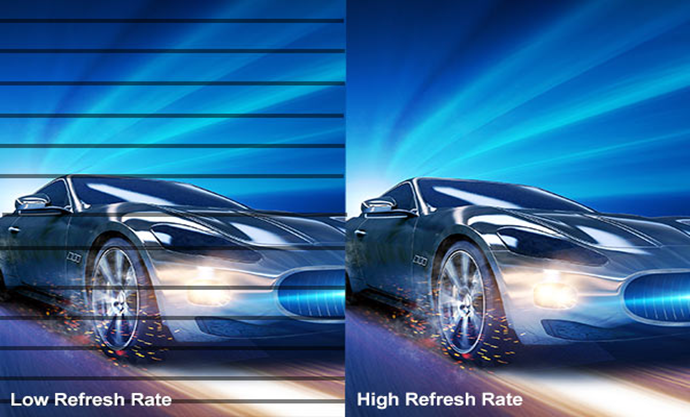
Unlike frame rate, which refers to the video content, refresh rate is a hardware feature of the LED video wall itself. A mismatch between the two can result in LED screen tearing or stuttering, reducing the effectiveness of even the most top-quality LED screens. This makes the refresh rate a key consideration for live broadcasts, concerts, XR production, and studio filming.
The refresh rate depends on LED driver ICs and scan modes. Static scan displays (1/1) support ultra-high refresh rates while scanning displays like 1/16 require high-speed chips to maintain performance. Choosing the right configuration ensures optimal visual output, especially for large-scale LED display installations.
A high refresh rate LED video wall not only improves the viewer’s visual comfort but also eliminates flickering artifacts that may appear on the camera. This is essential in professional environments where precision and clarity are non-negotiable.
Today, YES TECH’s 3840Hz LED displays are widely used, while 7680Hz LED panels are gaining popularity in premium markets. For seamless playback, reduced eye fatigue, and professional-grade imaging, investing in a high refresh LED display is the smart choice.